Good morning! It's Sunday, May 3, and welcome to our Sunday Edition, where we take a break from the news to explore the deeper context behind today's topics (our regular news digest will be back tomorrow). This Tuesday is Cinco de Mayo, so we explored the origins of the festive holiday celebrated across the US. We then dove further into Mexican history with the Aztec Empire. Lastly, we shared what we learned about another piece of Mexican heritage that became popular in America, the burrito. Scroll down to learn about the first time a British monarch ate a hot dog, use a tool to discover what your favorite musician played at a concert, and more. Or visit 1440 Topics for primers on Peloton, Measles, or 500 others. Have suggestions? Help us better serve our more than 4.7 million readers by sharing your honest feedback at topics@join1440.com. First time reading? Sign up here or click here to share with friends. — 1440 Topics Team |
|
|
|
The history of Cinco de Mayo Cinco de Mayo commemorates the Mexican army's surprise defeat of French forces at the Battle of Puebla on May 5, 1862. This event occurred after years of civil war left Mexico bankrupt, forcing President Benito Juárez to suspend payments on its foreign debt in 1861. France, Britain, and Spain initially sent troops to demand repayment. While Britain and Spain withdrew, Napoleon III of France pursued broader imperial ambitions, seeking to overthrow Juárez and install a European monarch in Mexico. At Puebla, a city around 80 miles southeast of Mexico City, Mexican Gen. Ignacio Zaragoza's outnumbered forces successfully repelled the French army, inflicting nearly 500 casualties. Although the French later captured Puebla and installed Archduke Maximilian of Austria as emperor, the victory became a powerful symbol of Mexican national identity and resistance. The holiday was little celebrated in the US until the Chicano civil rights movement popularized it in the 1960s as an expression of cultural pride. Today, Cinco de Mayo is observed far more widely in the United States than in Mexico, largely shaped by beer and spirits marketing beginning in the 1980s. It is often mistakenly confused with Mexican Independence Day, which takes place Sept. 16.
... Read what else we learned about Cinco de Mayo here.
Also, check out ... > The first holiday celebrations took place in California during the Civil War. (Read) > How Mexico's victory may have helped the Union during the Civil War. (Listen) > Leave the nachos behind and try traditional Pueblan dishes this holiday. (Read) > In recent years, beer sales on Cinco de Mayo have been higher than on Super Bowl Sunday. (Read) |
|
|
|
|
In partnership with ZBiotics |
|
Better Mornings With ZBiotics Pre-Alcohol |
|
Please support our sponsors! |
|
|
|
|
The Mexica's Flourishing Civilization |
What we learned about the Aztec Empire The Aztec Empire, an alliance of three warrior city-states, ruled over modern-day central Mexico from roughly 1428 to 1521, although Aztec settlements long predated the empire. Centered in the island capital of Tenochtitlan—a massive city with advanced infrastructure—the empire grew rapidly through conquest, diplomacy, and a tribute system, which integrated dozens of diverse city-states across the Valley of Mexico and beyond. At its height, the empire encompassed approximately 80,000 square miles of territory and had a population of around 5 million. The Aztecs were renowned for their highly productive agriculture, a formidable warrior culture, and elaborate religious ceremonies that occasionally involved human sacrifice. Amid Spain’s colonization of the Caribbean in the early 1500s, Spanish conquistadors led by Hernán Cortés arrived on the Gulf Coast of present-day Mexico in 1519. Cortés forged alliances with Indigenous groups hostile to Aztec rule, ultimately seizing Tenochtitlan, deposing Emperor Montezuma II, and ending the Empire’s control of the region.
... Read our full explainer on the Aztec Empire here.
Also, check out ... > Mexico City lies on the ruins of the Aztec capital, Tenochtitlan. (Explore) > The Aztecs worshipped over 200 gods. (Visualize) > See how the Aztec military's elite warriors trained. (Watch) > ... and a day in the life of an Aztec midwife. (Watch) |
|
|
|
|
The burrito, 101 Meaning “little donkey” in Spanish, the burrito is a Mexican dish with savory ingredients—like beans, meat, vegetables, and cheese—tightly rolled into a large flour tortilla to form a perfectly sealed pouch. The word “burrito” originally referred to what we today call a taco. The modern burrito developed in northern Mexico in the early 20th century, where most of the country’s wheat is grown. Migrant workers then brought the dish to the United States, where it quickly caught on, particularly in Southern California. El Cholo Spanish Cafe, Los Angeles’ oldest Mexican restaurant, first put burritos on its menu in the 1930s. Several distinct regional styles of burritos have developed over the years. One of the most popular is San Francisco’s Mission-style, which is usually filled close to bursting—supposedly because they were initially intended for hungry firefighters. The style is used by Chipotle, which has more than 3,500 stores on three continents and is immensely popular with Gen Z.
... Read our full write-up on the Burrito here.
Also, check out ... > Can you legally call a burrito a sandwich? (Watch) > Duane Roberts brought burritos to the masses by pioneering frozen foods. (Read) > Burritos originated in Chihuahua, Mexico. (Watch)
> How astronauts make burritos in space. (Watch) |
|
|
|
|
In partnership with ZBiotics |
|
It's Not Magic, It's Science |
|
Please support our sponsors! |
|
|
|
|
1440 Explores: Silicon Valley |
|
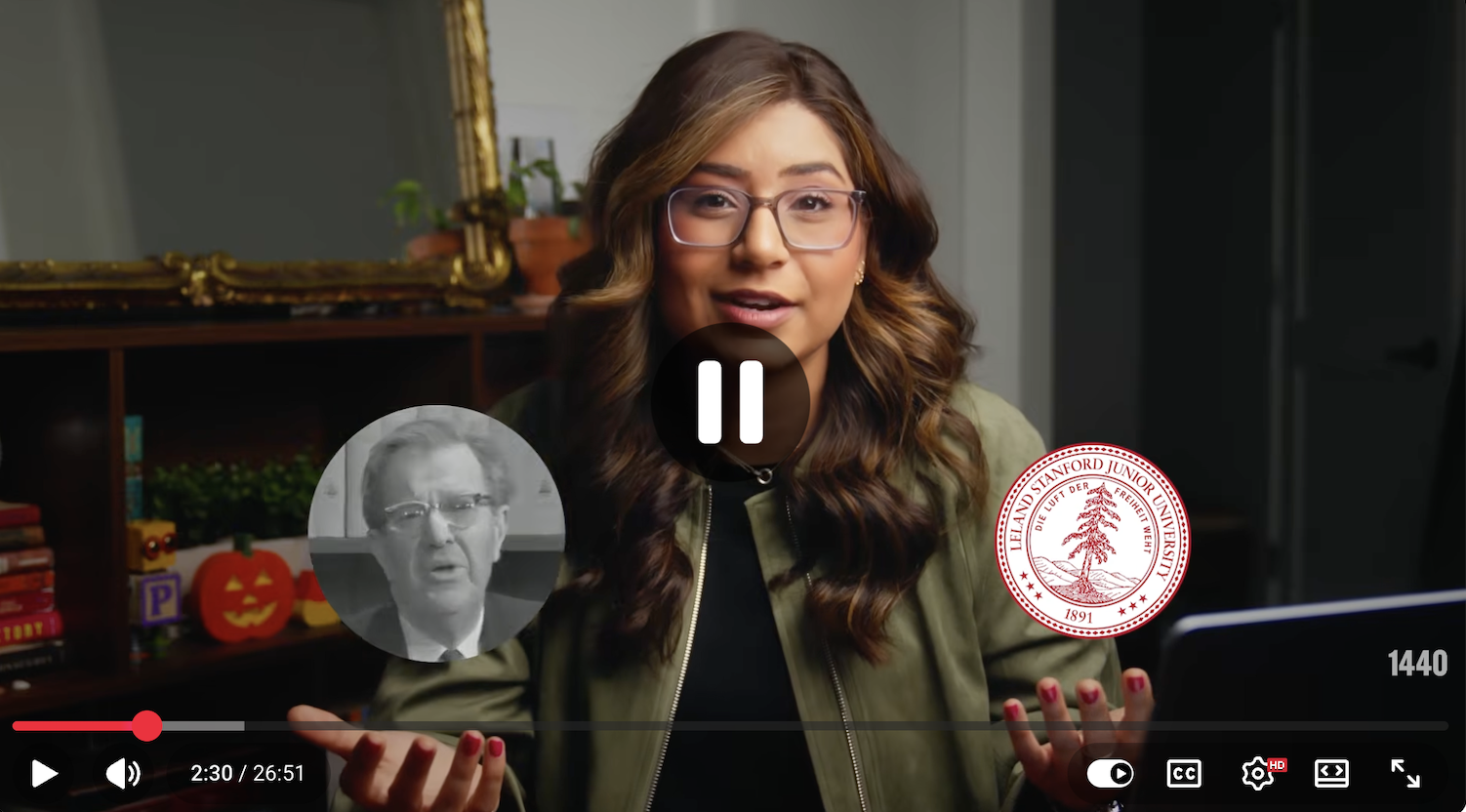
The real origin story of Silicon Valley is not what you think. 1440's Editor-in-Chief Sony Kassam and historian Margaret O'Mara trace how Cold War weapons contracts and a Stanford real estate gamble turned a patch of California orchards into the center of modern power. Watch the episode here or click below: |
|
|
|
Historybook: Philosopher Niccolò Machiavelli born (1469); Boxer Sugar Ray Robinson born (1921); Musician James Brown born (1933); Margaret Mitchell wins Pulitzer for "Gone With the Wind" novel (1937); First bulk spam email is sent (1978). |
|
|
|
|
"Burdens are for shoulders strong enough to carry them." |
- Margaret Mitchell in "Gone With the Wind" |
|
|
Behind the Name. In 1440, the printing press sparked a knowledge revolution. We carry that spirit forward, cutting through the noise and algorithm-driven feeds, to bring fact-driven knowledge to everyone. Send us your feedback at topics@join1440.com and help us stay as unbiased as humanly possible. We’re ready to listen. Want to connect with 4.7 million insatiably curious minds? Become a 1440 partner here. |
|
1440 Media 222 W Merchandise Mart Plaza, Suite 1212 Chicago, IL 60654 Copyright © 2026, 1440 Media, All rights reserved. |
|
|
|
|
|





Comments
Post a Comment
Welcome to my geopolitics blog site. This is a Hawaii Island news site focusing on geopolitical news, analysis, information, and commentary. I will cite a variety of sources, ranging from all sides of the political spectrum.